

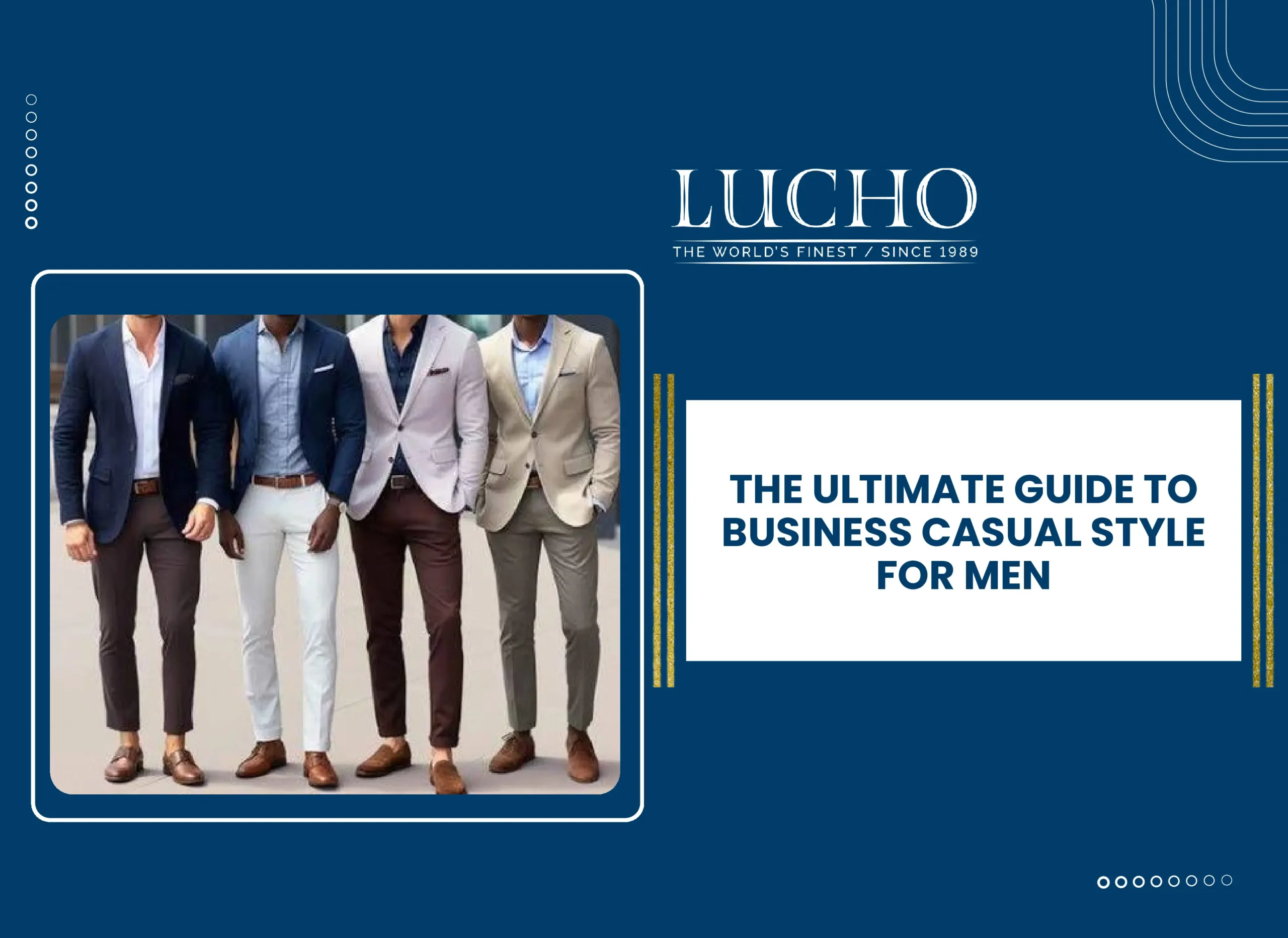
The Ultimate Guide to Business Casual Style for Men
You open your closet before work and do not know what counts as a business casual outfit for men anymore. Dress codes shifted fast, and old rules about blazers and khakis no longer fit modern offices, especially in Houston’s heat. This confusion costs you time each morning and confidence once you walk into meetings, client lunches, or presentations without a clear plan. Business casual outfits for men solve this problem when you know the real rules instead of guessing. This guide breaks down what counts, what to skip, and how to build outfits for office days and warm Houston afternoons, so you stop second-guessing your closet every morning.
Table of Contents
ToggleBusiness Casual Outfits for Men: The Quick Answer
Business casual means a collared shirt, dress pants or chinos, and closed-toe shoes, without a full suit or a tie. Add a blazer for meetings, and skip it for a normal office day. This one line covers most of what you need to know before you build a full wardrobe around it. The style sits between a full suit and casual weekend wear. It reads as put together, without feeling stiff or overdressed, which is why so many offices settled on it as their default dress code.
What Actually Counts as Business Casual
Business casual outfits for men rest on a few pieces worn together. A collared shirt forms the base, whether it is a button-down, a polo, or a fine knit sweater over a shirt. Dress pants, chinos, or dark denim in a strong shape fill out the bottom half. Shoes matter more than most men think. Loafers, oxfords, or clean leather sneakers all fit. Sandals, flip-flops, and worn-out running shoes do not, no matter how comfortable they feel on a long day. A blazer or sport coat lifts the look for meetings, without turning it into a full suit. Skip the tie unless your office asks for one, since a bare collar reads as clean and modern on its own.
What Does Not Count as Business Casual
Graphic tees, gym shorts, and flip-flops fall outside the range, no matter how sharp the rest of the outfit looks. Wrinkled shirts and stretched-out pants also break the look fast, since business casual depends on fit as much as it depends on the pieces you pick. Sneakers built for the gym read as too casual for most offices. Save those for the weekend, and keep a clean leather pair near the door for work. Baseball caps, oversized hoodies, and cargo shorts also sit outside the range, even in relaxed offices. These pieces belong to weekend wear, not a business setting, no matter how casual your company culture feels day to day.
How to Build Business Casual Outfits for Men Step by Step
Start with three or four shirts, two or three pairs of pants, one blazer, and two pairs of shoes. These pieces mix and match into more than a dozen full outfits, which cuts down on morning decisions fast. Building a small, strong wardrobe beats buying a large closet full of pieces which do not match. Fewer, better pieces stretch further across a full work week than a closet packed with items you rarely reach for.
Shirts and Tops
White and light blue button-down shirts work with almost every pair of pants you own. Add one patterned shirt and one knit polo for variety through the week. Fit matters more than the shirt itself. A shirt which pulls at the buttons or hangs loose at the shoulders reads as sloppy, even in a strong fabric. Get your shirts fitted through the shoulders and chest, since this is where most off-the-rack shirts fail first. Fabric weight also plays a role. Oxford cloth and light poplin both hold their shape through a full workday, while thin, cheap cotton wrinkles fast and loses its crisp look by noon.
Pants and Bottoms
Chinos in navy, gray, or khaki fit most office settings. Dark denim without rips works in relaxed offices, though it reads too casual in a law firm or a bank. Fit through the waist and length matters here too. Pants which pool at the ankle or sit too tight through the thigh pull focus away from the rest of the outfit. A clean break at the shoe, without extra fabric bunching, reads as sharp in almost any office. Stick with a straight or slim-straight cut for most builds. Skinny fits and baggy fits both pull attention away from the rest of your outfit, since either extreme reads as trying too hard or not trying at all.
Shoes and Belts
Brown or black leather loafers cover most business casual needs. Match your belt to your shoes, so the outfit reads intentional instead of thrown together at the last minute. A clean pair of office shoes finishes the look fast, since shoes carry more weight in a business casual outfit than in a full suit, where the jacket pulls most of the attention. Keep your shoes polished and free of visible wear. Scuffed toes and worn heels stand out fast, even under a strong shirt and pants combination, since shoes sit at eye level for most of a seated meeting.
Business Casual vs Business Professional
Business professional means a full suit, dress shirt, and tie, built for interviews, courtrooms, and formal client meetings. Business casual outfits for men drop the tie and often the full suit, while keeping the same level of polish through fit and fabric. Offices in finance, law, and government lean toward business professional most weeks. Tech offices, agencies, and startups lean toward business casual, though both styles show up across most industries depending on the meeting. When you are not sure which one fits your day, dress a step above the room. A blazer over a business casual outfit bridges the gap fast, without a full change of clothes, and it reads as prepared no matter who walks through the door.
Business Casual Outfits for Men by Industry
Different industries expect slightly different versions of business casual. Knowing your field helps you build a wardrobe which fits your actual meetings, not a generic office guide.
Finance and law. Lean toward the formal end of business casual. Stick with white, light blue, or subtle striped shirts, dark chinos or dress pants, and leather oxfords or loafers.
Tech and startups. Sit at the relaxed end. Clean sneakers, dark denim, and a knit polo often work fine, though a blazer still helps for client-facing meetings or investor calls.
Sales and client-facing roles. Split the difference. Build outfits which read as sharp without feeling stiff, since you often move between office days and in-person client meetings on the same day.
Creative fields. Allow the most room for personal style, though fit and fabric quality still matter. A well-fitted shirt and clean shoes go further than trend pieces which age fast.
Best Business Casual Outfits for Men in Houston Weather
Houston heat changes what fits through most of the year. Lightweight cotton and linen blend shirts breathe better than heavy fabrics, which matter through long summer afternoons walking between meetings and parking lots. Chinos in a lighter weight fabric hold their shape without trapping heat the way heavy wool pants do. Save darker, heavier fabrics for the short winter stretch, when Houston temperatures actually drop enough to need them. A blazer built in a lighter fabric still lifts a business casual outfit for a client meeting, without leaving you soaked through by the time you reach the office door. Look for half-lined or unlined blazers through spring and summer, since a fully lined jacket traps heat fast in Houston humidity. Breathable undershirts also help more than most men expect. A moisture-wicking layer under your dress shirt keeps sweat from showing through by early afternoon, which matters through back-to-back meetings without a break to change.
Business Casual Mistakes to Avoid
A few small mistakes break an otherwise strong business casual outfit fast. Fix these, and your look holds up through a full week of meetings.
Wearing the wrong shoes. Sneakers built for running or the gym read as too casual, no matter how clean they look. Stick with loafers or leather oxfords instead.
Skipping fit checks. A shirt or pair of pants which fits wrong pulls focus away from the rest of the outfit, even in strong fabric and color.
Over-dressing or under-dressing for the room. A full suit in a relaxed office reads as stiff, while jeans and a t-shirt in a client-facing role reads as underprepared.
Ignoring fabric weight for the season. Heavy fabric through a Houston summer leads to a wrinkled, sweat-through look by midday, no matter how sharp the outfit started.
Forgetting the details. A frayed belt, scuffed shoes, or wrinkled collar undoes an otherwise strong outfit. Small details carry more weight than most men expect in a business casual setting.
How Often Should You Refresh Your Business Casual Wardrobe
Shirts and pants worn several times a week wear out faster than most men expect. Plan to replace shirts every year or two, depending on fabric quality and wash frequency, since collars and cuffs show wear first. Shoes last longer with proper care. A quality leather pair, resoled when needed, holds up for several years, while cheap shoes often need replacing within a single year of regular wear. A seasonal check twice a year, once before summer and once before winter, keeps your business casual wardrobe ready without a full closet overhaul each time the weather shifts.
Final Word
Business casual outfits for men come down to fit, fabric, and a few strong pieces worn on repeat. Once you build the base wardrobe, mornings stop feeling like guesswork, and every meeting starts with less stress. If you want your business casual wardrobe fitted right for Houston heat and office days, our personal stylists in Houston build outfits around your body and your schedule, and you are able to browse the full Lucho collection for shirts, pants, and blazers built for the way you work.
Frequently Asked Questions
A collared shirt, dress pants or chinos, and closed-toe shoes cover most business casual settings. Add a blazer for meetings, and skip a full suit and tie unless your office asks for one directly
Dark, unripped denim fits in relaxed offices, though it reads too casual in law firms, banks, and other formal settings. Chinos read as the safer choice across most workplaces.
Clean leather sneakers fit a relaxed office setting. Athletic sneakers built for running or the gym fall outside business casual, no matter how new or clean they look.
Business casual leans toward office wear, with dress pants and collared shirts. Smart casual leans toward social settings, with room for well-fitted jeans, sneakers, and more relaxed layers.
Not for a normal office day. Add one for client meetings, presentations, or interviews, since a blazer lifts a business casual outfit fast without turning it into a full suit.
Contact Us
Recent Posts
- How a Dress Shirt Should Fit: 6 Easy Checks
- Your First Custom Suit Fitting: What Happens and How to Prepare
- What Is Cocktail Attire for Men? A Simple Guide
- Wool vs Linen vs Cotton: Best Suit Fabric for Houston Heat
- What to Wear to a Cigar Lounge: A Men’s Style Guide
- How to Measure Yourself for a Suit at Home (Easy Guide)
- Suit vs Tuxedo: The Real Difference (and When to Wear Each)
- The Return of the Double-Breasted Suit: How to Wear It in 2026
- Best Dress Pants for Men: The Ultimate 2026 Fit & Style Guide
- Black Suits Men: Style Guide & When to Wear Them