

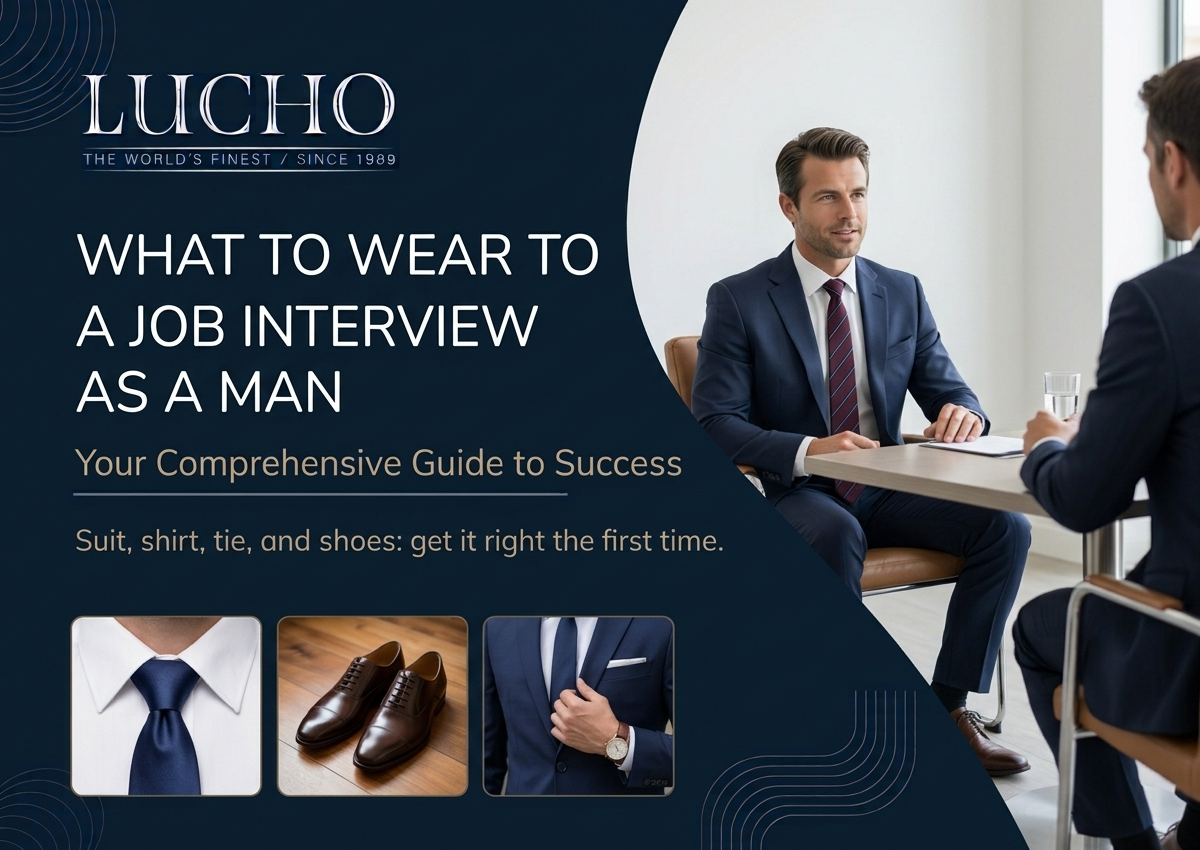
What to Wear to a Job Interview as a Man: Suit, Shirt, Tie, and Shoes
For most job interviews, men should wear a navy or charcoal suit, a white or light blue dress shirt, a simple tie, and polished leather dress shoes. Make sure everything fits well and is clean and pressed. When you are unsure, dress one step above what the company wears every day.
An interview is a short meeting. In that short time, someone decides if they want you on their team. They look at your answers. They also notice how you show up. Your clothes do not get you the job. But the wrong clothes can hurt your chances before you say a word.
This guide takes the guesswork out. You will learn what to wear, what colors work best, how to handle different types of jobs, and how to stay cool and calm in Houston weather.
The Golden Rule of Interview Clothes
Here is the rule that helps in almost every case: dress one step above the job.
If people at the company wear jeans and T-shirts, wear dress pants and a collared shirt, maybe with a blazer. If people wear business casual, wear a suit. If people already wear suits, wear a sharp, well-fitted suit and a tie.
Why does this work? Dressing up shows you take the meeting seriously. It shows respect for the people you are meeting. Nobody has ever lost a job offer because they looked too neat.
Still, you should not go too far. Wearing a formal tuxedo to a startup interview would feel odd. The goal is to look prepared, not costume-ready.
Step 1: Research the Company
Before you pick an outfit, spend ten minutes learning about the workplace.
- Check the company website. Look at team photos. What do people wear?
- Look at social media. Company pages often show office life.
- Ask the recruiter. It is fine to say, “What is the dress code for the interview?” Most recruiters are glad you asked.
- Think about the role. A bank teller, a sales rep, and a graphic designer may all dress differently.
Once you know the level, you can pick your outfit with confidence.
Step 2: Pick the Right Suit Color
If you decide a suit is right, color is your first big choice. Here are your best options.
Navy
Navy is the top choice for interviews. It looks professional, friendly, and confident. It works on nearly every skin tone. It also pairs with almost any shirt and tie. If you only own one suit, navy is the one to buy first.
Charcoal gray
Charcoal gray looks serious and polished. It is a great pick for finance, law, and other traditional fields. It also hides small wrinkles well.
Medium gray
Medium gray is a good choice for warmer months and less formal offices. It looks fresh and clean.
What about black?
A black suit is not the best pick for an interview. It can look too formal or too serious, and many people link it with evening events. It can work for some jobs, but navy or gray usually looks better. If you want to understand the difference, read our post on navy vs. black suits.
Colors and patterns to skip
- Bright colors like red, orange, or light blue suits
- Loud stripes, plaids, or checks
- Shiny fabrics
- Cream or white suits
Keep the suit plain. You want the interviewer to remember you, not your outfit.
Step 3: Choose the Right Shirt
The shirt is a small detail that makes a big difference.
Best choices: A white or light blue dress shirt. White looks clean and sharp. Light blue adds a little warmth and is easy to pair with a navy or gray suit.
Fit matters. The collar should not gap or choke. The sleeves should end at your wrist, with a bit of cuff showing under the jacket. If your shirts feel off, our guide on how a dress shirt should fit can help you check.
Press it. A wrinkled shirt sends the wrong message. Iron or steam it the night before. Check the collar and cuffs, since those are the first places people notice.
Skip: Loud patterns, short sleeves, and dirty or stained collars.
Step 4: Pick a Tie (Or Not)
For most interviews, a tie is the safe choice. A tie shows you are serious. You can take it off later if the mood is casual, but you cannot add one you left at home.
Good tie choices:
- Solid navy, burgundy, or gray
- Small dot patterns
- Thin stripes
- Small geometric patterns
How to wear it right:
- The tip of the tie should reach your belt buckle.
- The knot should be neat and centered.
- The top button of your shirt should be closed under the knot.
When to skip a tie: In some creative or tech workplaces, no one wears ties. In that case, a suit or blazer with an open collar can work. But if you are not sure, wear one.
Step 5: Shoes, Belt, and Socks
People often forget these. Do not.
Shoes: Wear leather dress shoes in black or dark brown. Oxfords and derbies are safe. Polish them the night before. Dirty or scuffed shoes show a lack of care. Our post on office shoes for men can help you choose.
Belt: Match your belt to your shoes. Black shoes go with a black belt. Brown shoes go with a brown belt.
Socks: Wear dark dress socks that are long enough to cover your ankles when you sit. Short or white athletic socks stand out in a bad way.
Step 6: Keep Extras Simple
Small details add up. Here is a short list.
- Watch: A simple watch is great. Skip anything loud or flashy.
- Jewelry: A wedding ring is fine. Keep other jewelry small or leave it home.
- Cologne: Use very little, or none. Strong smells bother many people.
- Grooming: Trim your hair and nails. Shave or neatly trim your beard.
- Bag: Carry a clean folder or slim bag. Skip the messy backpack.
- Phone: Silence it before you walk in.
You are aiming for calm and neat, not fancy.
What to Wear for Different Types of Jobs
Not every interview asks for a full suit. Here is a simple guide.
Type of job | What to wear |
Finance, law, government, corporate | Navy or charcoal suit, white shirt, conservative tie, black dress shoes |
Sales, real estate, client-facing roles | Navy or gray suit, white or light blue shirt, tie, polished shoes |
Tech, startups, creative fields | Blazer or suit, dress shirt, optional tie, clean leather shoes |
Healthcare office roles | Suit or dress pants with a shirt and tie, closed shoes |
Skilled trades, retail, food service | Clean dress pants, collared shirt, maybe a blazer, dress shoes |
Remote or video interview | Collared shirt or blazer, plain background, look neat from the waist up |
Use this as a starting point. Then check the company and adjust.
Interview Attire in Houston Heat
Houston has a special challenge. Many interviews happen in summer, and the walk from the parking lot can leave you damp. Here is how to look fresh and stay cool.
Wear a lighter suit fabric. Lightweight wool and wool blends look great and breathe better than heavy fabrics. They handle heat much better.
Arrive early and cool down. Get there 10 to 15 minutes early. Sit in the lobby with the air conditioning. Let your body cool before you meet anyone.
Carry your jacket on the walk. Put it on just before you enter. Take care to keep it from wrinkling. A garment bag or a careful drape over your arm works well.
Wear an undershirt. A thin cotton undershirt can absorb sweat and protect your dress shirt.
Keep a small towel or tissue in the car. Use it to pat your forehead before you go in.
Do a quick check in the car mirror. Fix your collar, tie, and hair. Then walk in with confidence.
Fit Is More Important Than Price
Many job seekers think they need an expensive suit. Not true. A moderate suit that fits well will beat a costly suit that does not.
Here is a quick fit check for the jacket:
- The shoulder seams sit at the edge of your shoulders.
- The jacket buttons without pulling.
- Sleeves show about half an inch of shirt cuff.
- The jacket covers your seat.
- Pants touch the top of your shoes with a small break, and do not pool at your ankles.
If a suit does not pass these checks, a tailor can fix many issues. Or you might consider a suit made for your body. That way, the fit is right from the start.
Night-Before Checklist
Do this the night before your interview. It saves stress in the morning.
- Try on the full outfit to make sure it fits
- Press your suit and shirt
- Polish your shoes
- Pick your tie and socks
- Check for loose buttons, stains, or lint
- Pack a folder, a pen, and extra copies of your resume
- Plan your route and parking
- Get a good night of sleep
Common Mistakes to Avoid
Wearing a suit that does not fit. Baggy or tight suits look worse than a simple blazer that fits well.
Skipping the iron. Wrinkles look careless.
Wearing worn-out shoes. Interviewers notice your shoes more than you think.
Trying too hard to stand out. A bold tie or bright socks may not help you here. Save personality for the conversation.
Wearing something new for the first time. Try your outfit on at least once before the day. Make sure you can sit, walk, and shake hands comfortably.
Forgetting about the weather. Rain, heat, and cold all change how you arrive. Plan for them.
Frequently Asked Questions
What color suit should a man wear to a job interview?
Navy and charcoal gray are the best choices. They look professional and work with most shirts and ties. Medium gray works well in warmer weather.
Is a black suit okay for an interview?
It can work in some cases, but navy or gray is usually better. Black can look too formal for a job interview.
Do I need to wear a tie to an interview?
In most cases, yes. A tie shows you take the interview seriously. Skip it only if you know the workplace is very casual, and even then, bring one.
What should I wear if the interview is casual?
Wear dress pants or dark chinos, a collared shirt, and a blazer. Add leather shoes. Aim to look neat and one step above the team.
Can I wear brown shoes to an interview?
Yes. Dark brown leather dress shoes work well with navy and gray suits. Match your belt to your shoes.
What should I wear to a video interview?
Wear a collared shirt or blazer. Choose a solid color, since busy patterns can look odd on camera. Do not wear pajama pants, even if no one can see them. Dressing fully helps you feel ready.
How early should I buy an interview suit?
Give yourself at least a few weeks. That way, you can fix any fit problems before the big day.
Get Interview-Ready at Lucho
The right suit helps you walk in with confidence. At Lucho, we have been helping Houston men dress for big moments since 1989. Our team can help you choose the right color, fabric, and fit for your interview, so you can focus on doing your best.
Visit us at 3637 W. Alabama, Suite 100, Houston, TX 77027, or call 832-495-8558. You can also browse our men’s suits to get started.
Contact Us
Recent Posts
- What to Wear to a Job Interview as a Man: Suit, Shirt, Tie, and Shoes
- How a Dress Shirt Should Fit: 6 Easy Checks
- Your First Custom Suit Fitting: What Happens and How to Prepare
- What Is Cocktail Attire for Men? A Simple Guide
- Wool vs Linen vs Cotton: Best Suit Fabric for Houston Heat
- What to Wear to a Cigar Lounge: A Men’s Style Guide
- How to Measure Yourself for a Suit at Home (Easy Guide)
- Suit vs Tuxedo: The Real Difference (and When to Wear Each)
- The Return of the Double-Breasted Suit: How to Wear It in 2026
- Best Dress Pants for Men: The Ultimate 2026 Fit & Style Guide