

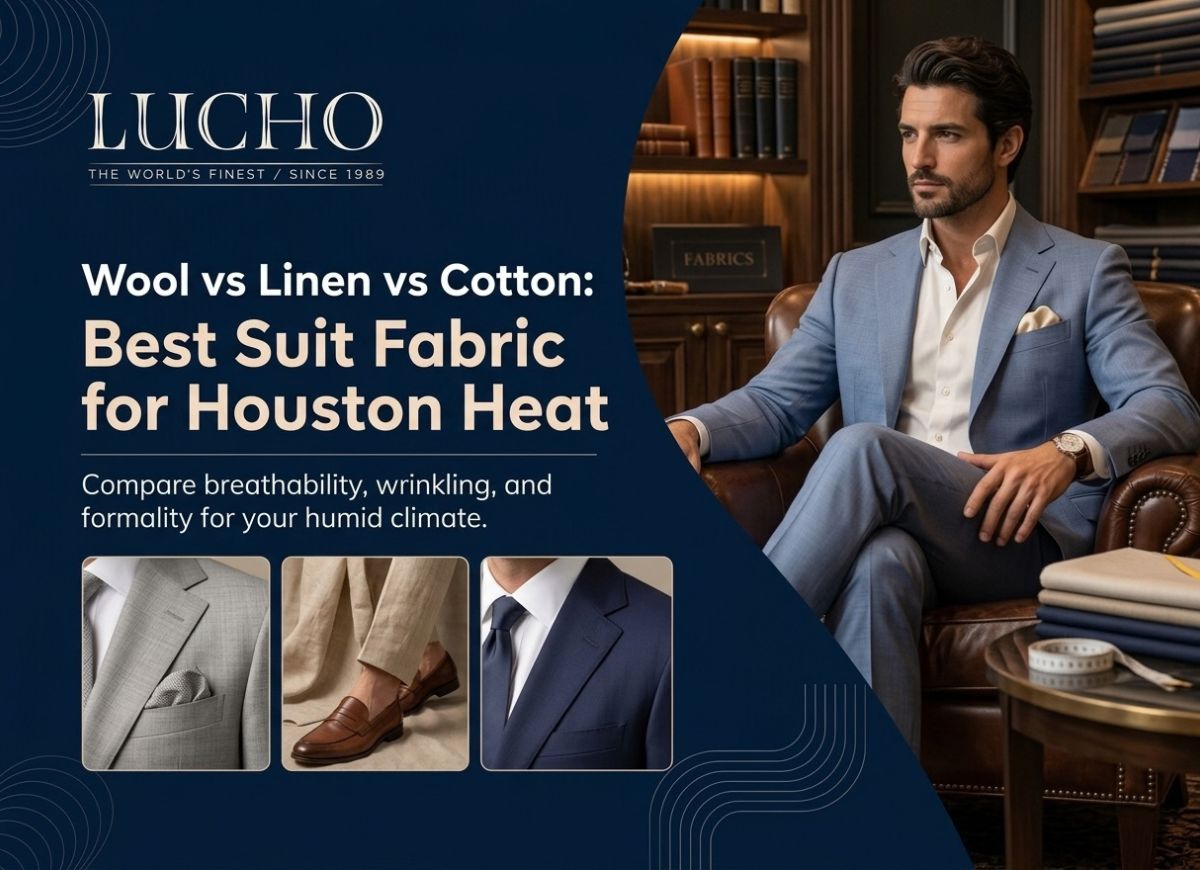
Wool vs Linen vs Cotton: Best Suit Fabric for Houston Heat
For Houston’s combination of heat and humidity, a lightweight wool blend or wool and linen blend is usually the best all-around suit fabric. It handles humidity better than pure linen, wrinkles less, and still looks sharp enough for work or a formal event. Pure linen is the coolest option but wrinkles fast and can feel too casual for the office. Cotton lands in the middle, breathable and structured, but it can wrinkle more than wool over a long, humid day.
Table of Contents
ToggleThat is the short answer. Below, we will break down exactly how each fabric performs in Houston’s climate specifically, since general hot weather advice written for a dry climate does not always hold up once real humidity gets involved.
Why Houston’s Climate Is Harder on Suits Than Most Hot Climates
A lot of suit fabric advice online is written for hot, dry climates, places where the heat is intense but the air itself is not heavy with moisture. Houston is a different challenge entirely. The combination of high heat and high humidity means fabric has to do two jobs at once: let heat escape and let moisture evaporate, without collapsing into a wrinkled mess by lunchtime or clinging uncomfortably to the skin.
This is why a fabric that performs beautifully in Arizona or Southern California will not necessarily perform the same way in Houston. Humidity changes everything, from how a fabric drapes to how quickly it wrinkles to how it smells by the end of the day.
Dry heat pulls moisture away from fabric quickly, which is part of why a linen suit in a desert climate can stay relatively fresh looking through an afternoon. Humid heat does the opposite. Moisture in the air slows evaporation from both your body and your clothing, which means sweat lingers longer, wrinkles set in faster, and fabric that would otherwise bounce back into shape stays creased. Anyone who has worn a suit to an outdoor Houston event in August already understands this without needing the science explained, but it is worth knowing why certain fabrics hold up better than others once you understand what is actually happening.
Wool
Wool has a reputation as a cool weather fabric, but that only applies to heavy, traditional wool weaves. Lightweight wool, sometimes called tropical wool or fresco wool, is a completely different experience. It is woven with an open structure that lets air move through the fabric, which helps regulate temperature even in warm conditions.
Strengths for Houston: Wrinkle resistant, holds its shape all day, works for both business and formal settings, and does not show sweat as visibly as some lighter fabrics.
Weaknesses for Houston: Standard, heavier wool weaves trap heat and will feel miserable in Houston’s summer. You need a lightweight or tropical weight wool specifically, not just any wool suit.
Best for: Year round wear, business settings, and anyone who wants one suit that performs well across every Houston season without needing a separate summer and winter wardrobe.
Linen
Linen is the most breathable natural fabric available for suiting, and it is the fabric most people picture when they think of hot weather dressing. It is made from flax fibers with a loose weave that allows serious airflow, which is exactly what a long, humid Houston afternoon calls for.
Strengths for Houston: Unmatched breathability, dries quickly, and has a relaxed texture that feels effortless in extreme heat.
Weaknesses for Houston: Wrinkles fast, sometimes within an hour of putting it on, and the wrinkled look can feel too casual for a formal business setting or a client meeting. Humidity also makes linen wrinkle faster than it would in a dry climate.
Best for: Outdoor summer weddings, casual warm weather events, and anyone who does not mind (or actually likes) the relaxed, lived-in texture linen naturally develops throughout the day.
Cotton
Cotton sits comfortably between wool and linen. It holds a crisper line than linen, giving it a slightly more polished look, while still offering solid breathability for warm weather. Cotton suits are common in business casual and smart casual settings, though they read as less formal than a wool suit in most professional contexts.
Strengths for Houston: Breathable, familiar, comfortable against the skin, and versatile enough for both business casual and social events.
Weaknesses for Houston: Wrinkles more than wool, though generally less dramatically than pure linen. Also less structured than wool, which can matter for a more formal or corporate look.
Best for: Business casual environments, weekend events, and situations where you want something more breathable than wool but slightly more polished and less wrinkle prone than linen.
Seersucker: The Honorable Mention
Seersucker deserves its own quick mention since it comes up constantly in hot weather suiting conversations. It is a cotton fabric woven with a puckered texture that lifts the fabric slightly off the skin, improving airflow and reducing that sticky feeling humid heat causes. It has a distinct, textured look that leans casual and Southern in style, which makes it a great choice for warm weather social events but a less natural fit for a formal boardroom setting.
Fabric Comparison Table
| Fabric | Breathability | Wrinkle Resistance | Formality | Best Houston Use |
|---|---|---|---|---|
| Lightweight wool | Good | Excellent | High | Year round, business, formal events |
| Linen | Excellent | Poor | Medium to low | Outdoor summer events, casual settings |
| Cotton | Good | Fair | Medium | Business casual, weekend events |
| Wool and linen blend | Very good | Good | Medium to high | Best all-around warm weather option |
| Seersucker | Very good | Fair | Low to medium | Casual summer events, warm weather socials |
Why Fabric Blends Often Win in Houston
If you only remember one piece of advice from this guide, make it this: fabric blends often outperform any single fiber on its own in a climate like Houston’s. A wool and linen blend, for example, keeps much of linen’s breathability while gaining wool’s wrinkle resistance and structure. This combination solves the two biggest complaints Houston suit wearers have, feeling overheated in pure wool and looking wrinkled by noon in pure linen, without fully sacrificing either benefit.
Wool and silk blends work similarly, adding a bit of natural sheen and softness while keeping the breathability and moisture wicking wool is known for. If you are building a suit specifically for Houston’s climate rather than buying something designed for a different part of the country, asking about blended fabrics is one of the most useful questions you can bring to a fitting.
Building a Suit Wardrobe Around Houston’s Seasons
Houston does not really have four distinct seasons the way much of the country does. Summers are long, hot, and humid, while winters are short and mild by comparison. This changes how a smart suit wardrobe should be built here compared to a city with a real cold season.
A practical approach for most Houston professionals is two go-to fabrics rather than one. A lightweight or tropical weight wool suit in a versatile color like navy or charcoal handles the vast majority of the year, including the short, mild winter. A second suit in a breathable summer fabric, whether that is a wool and linen blend, pure cotton, or seersucker for more casual events, covers the peak of summer when even a lightweight wool starts to feel like too much. Trying to get by on a single heavy, traditional wool suit designed for a colder climate is one of the most common mistakes new Houston professionals make, since that suit will feel wearable for only a small fraction of the year here.
Construction Matters as Much as Fabric
Fabric choice is only half the picture. How the suit is built changes how it performs in heat just as much as what it is made from.
- Unlined or half-lined jackets breathe significantly better than fully lined jackets, since there is less fabric layered against your body.
- Lighter shoulder padding creates a more relaxed structure that allows better airflow through the jacket.
- Single-breasted styles can be worn unbuttoned for quick relief from heat, something a double-breasted jacket does not allow as easily.
- Lighter colors, like light gray, tan, or soft blue, reflect more sunlight and feel noticeably cooler outdoors than a dark navy or black suit, especially for outdoor events.
A tailor who understands Houston’s climate specifically will factor all of this in alongside the fabric itself, since two suits made from the exact same cloth can feel completely different depending on how they are constructed.
Caring for a Warm Weather Suit in Houston
Humidity is tough on fabric, and Houston’s climate means suits get more wear and tear from sweat and moisture than they would in a drier city. Proper care matters more here than it does almost anywhere else, from how often you dry clean a suit to how you store it between wears. If you already own a wool suit and want to keep it performing well through a Houston summer, our guide on how to care for a wool suit walks through the details.
Frequently Asked Questions
What is the best suit fabric for Houston summers?
A lightweight wool or wool and linen blend is generally the best overall choice, since it balances breathability with wrinkle resistance better than pure linen or pure cotton on their own.
Is linen too casual for a Houston office?
Pure linen can read as too casual for a conservative office environment because of how quickly it wrinkles. A linen blend, mixed with cotton or wool, keeps the breathability while looking more polished throughout the day.
Can I wear a wool suit in Houston year round?
Yes, as long as it is a lightweight or tropical weight wool rather than a heavy, traditional weave. A properly chosen lightweight wool suit can genuinely work through every Houston season without needing to be swapped out.
Does color affect how hot a suit feels?
Yes. Lighter colors reflect more sunlight and feel noticeably cooler than dark colors, especially outdoors. This matters more in Houston than in cooler climates simply because of how much time is spent outside in direct heat.
What fabric wrinkles the least in Houston humidity?
Wool wrinkles the least among common suiting fabrics, followed by cotton, with linen wrinkling the fastest. Humidity accelerates wrinkling in all fabrics compared to a dry climate, which is why wool and wool blends tend to hold up best through a full Houston day.
Should I own more than one suit fabric if I live in Houston?
Most people benefit from at least two. A lightweight wool suit for year round business and formal use, paired with a breathable summer fabric like a wool and linen blend or cotton for the hottest months, covers the range of situations a single suit built for a colder climate simply cannot handle.
The Bottom Line
Houston’s heat and humidity call for a different fabric strategy than most generic hot weather suiting advice accounts for. Lightweight wool and wool blends offer the best overall balance of breathability, wrinkle resistance, and formality. Linen wins on pure coolness but loses on wrinkling and formality. Cotton sits comfortably in between. Construction details like lining, shoulder padding, and color matter nearly as much as the fabric itself.
If you want a suit built specifically for Houston’s climate rather than one designed for somewhere drier, Lucho’s custom suit process in Houston starts with the right fabric for how you will actually wear it here.
Contact Us
Recent Posts
- How a Dress Shirt Should Fit: 6 Easy Checks
- Your First Custom Suit Fitting: What Happens and How to Prepare
- What Is Cocktail Attire for Men? A Simple Guide
- Wool vs Linen vs Cotton: Best Suit Fabric for Houston Heat
- What to Wear to a Cigar Lounge: A Men’s Style Guide
- How to Measure Yourself for a Suit at Home (Easy Guide)
- Suit vs Tuxedo: The Real Difference (and When to Wear Each)
- The Return of the Double-Breasted Suit: How to Wear It in 2026
- Best Dress Pants for Men: The Ultimate 2026 Fit & Style Guide
- Black Suits Men: Style Guide & When to Wear Them