

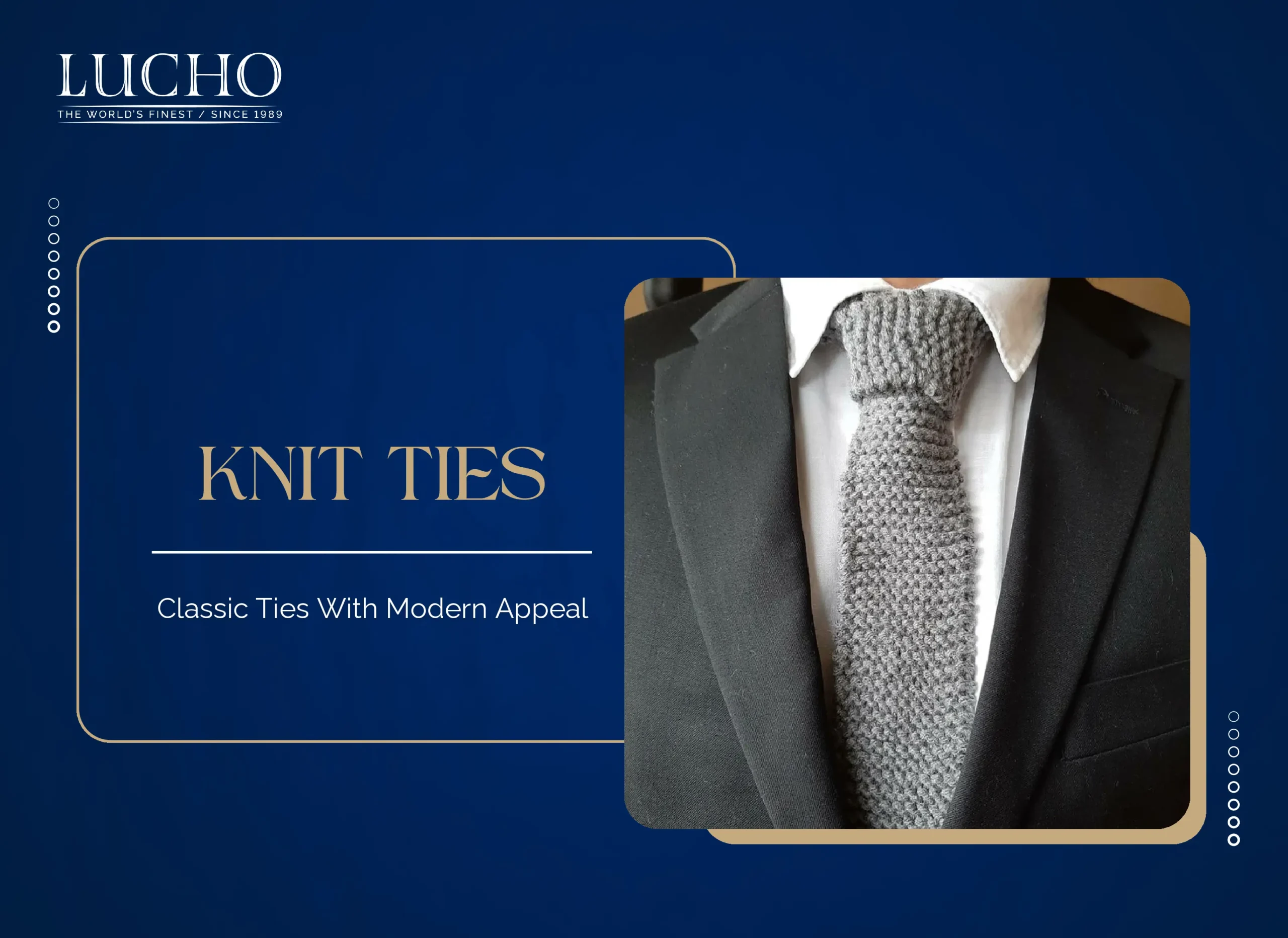
How to Wear a Knit Tie: A Complete Style Guide
Ever finished getting dressed and felt something was missing? Not too formal, not too casual, but somewhere in between. A knit tie often fills the gap. It’s a small piece with a big effect on how an outfit reads. This guide covers what a knit tie is, how to wear one, how to pick the right one, and how to keep it in good shape.
Table of Contents
ToggleWhat Is a Knit Tie?
A knit tie is made by knitting the fabric together instead of weaving it. This is the main difference from a standard tie. Look closely at one and you’ll see small loops of fabric forming the texture, which gives it a slightly bumpy, tactile look and feel.
Two other details set a knit tie apart. First, the end is cut flat and square instead of pointed, unlike most standard ties. Second, the width runs narrower than a typical tie, usually between 2 and 2.5 inches. Together, the flat end and slim shape are what give a knitted silk tie or wool tie its casual, textured character.
A Little History
Knit ties aren’t new. They picked up popularity as men started dressing in a style sitting between fully formal and plainly casual. People wanted an outfit looking put together without the stiffness of a boardroom look, and the knit tie fit the gap well. It still does today.
Types of Knit Ties
Knit ties come in a handful of materials, each suited to different weather and occasions.
- Silk knit ties: The most common choice. Slightly shinier, and versatile enough to wear across most seasons.
- Cotton and linen knit ties: Lighter and more breathable, so they suit spring and summer well. Linen is the lightest option of the group.
- Wool knit ties: Add warmth and texture for fall and winter, and work well with heavier fabrics like tweed and flannel.
- Handmade knit ties: Usually higher quality than machine-made versions, with a tighter stitch, holding its shape over years of wear. Worth the extra cost if you find one you like.
If you’re weighing a knit tie against other styles like wool or bow ties, our guide to tie types breaks down the full lineup.
Why Wear a Knit Tie?
A knit tie sits in a spot most other ties don’t reach: between casual and put-together. Wear it to a relaxed dinner, a weekend event, or a low-key day at the office, and it tends to look right without trying too hard.
Texture is the biggest reason it works. Most outfits lean on smooth fabrics, so a knit tie adds contrast and makes a look more interesting with little effort. Silk knit ties work through most of the year, wool suits colder months, and cotton or linen cover the heat.
How to Wear a Knit Tie
Knit ties are forgiving once you know a few basics for each setting.
Casual and Smart Casual Outfits
The most common pairing is a blazer or sport coat with chinos or trousers, which gives a smart-casual look without a full suit. A navy blazer, gray trousers, and a white shirt is a reliable combination. A denim jacket or casual coat works too, for a more relaxed feel.
Business and Semi-Formal Looks
A knit tie pairs with a suit, but the fabric matters. A smooth, formal suit clashes with the texture. A suit in a more casual cloth, like tweed, corduroy, or linen, works well instead, since the textures match and the outfit feels intentional. Skip the knit tie for a job interview or a black-tie event, but it’s a solid pick for a creative office, a client lunch, or a casual Friday.
Weekend and Casual Looks
A knit tie also works on weekends. Try it with a denim shirt and a light cardigan, or layer it under a chore coat or barn jacket. The goal is a relaxed drape rather than a stiff, precise knot.
Colors and Patterns
For a first knit tie, start with a solid color. Navy, burgundy, olive, and gray pair with almost everything already in a wardrobe and make good starting points before moving into patterns or brighter shades.
How to Choose the Right Knit Tie
Not every knit tie is built the same. Here’s what to check before buying one.
Width
A slimmer build usually suits a tie around 2.25 inches wide, while a broader build looks more balanced in a 2.5-inch width. Knit ties run narrower than standard ties overall, since a narrower width feels more natural in the casual settings where knit ties are worn.
Length
The tip should land around the belt buckle, following the same rule as a standard tie. Make sure the square end stays visible and isn’t tucked away, since it’s a defining feature of the style.
Fabric
Match the fabric to the season and occasion: silk for most of the year, wool for cold weather, cotton or linen for heat. Skip polyester knit ties. They’re cheap, don’t drape well, and rarely look worth the low price.
Construction Quality
Check the stitching. A well-made knit tie has tight, even stitches holding their shape, clean edges, and a neatly finished square end. Loose or uneven stitching is a sign it won’t last.
How to Tie a Knit Tie
The Four-in-Hand knot suits knit fabric best, since its small, simple shape fits the material well.
- Drape the tie around the neck with the wide end on the right, hanging lower than the narrow end.
- Cross the wide end over the narrow end, moving left.
- Wrap the wide end behind the narrow end, moving right.
- Bring the wide end across the front again.
- Pull the wide end up through the neck loop from below.
- Feed the wide end down through the front loop.
- Pull the wide end down gently to tighten the knot.
- Hold the narrow end and slide the knot up into place.
How to Take Care of a Knit Tie
Good care keeps a knit tie in shape for years.
Cleaning
Skip the washing machine. Spot-clean small stains with a soft cloth and cold water. For bigger cleaning jobs, take it to a dry cleaner and tell them the fabric so they use the right method.
Storage
Avoid hanging a knit tie for long stretches, since gravity stretches the fabric and leaves it longer and thinner over time. Roll it loosely and store it in a drawer instead.
Dealing With Snags
If a thread pulls loose, don’t cut it. Thread it back through to the inside of the tie instead, since trimming often makes a snag worse. To avoid snags in the first place, keep the tie away from rough surfaces like bag straps and coat zippers.
Making It Last
Rotate ties instead of wearing the same one every day, so each one gets time to recover its shape between wears. Stick to gentle cleaning methods and skip heavy detergents, even for small spot cleans.
Conclusion
A knit tie is one of the easiest ways to add texture and personality to an outfit without overcomplicating it. Get the fabric right for the season, match the width to your build, tie a simple Four-in-Hand, and store it rolled up in a drawer. Those four habits keep a knit tie looking good for years.
Ready to shop? Browse the full tie collection or head to the Lucho homepage to see the rest of the wardrobe.
Frequently Asked Question
A knit tie is made by knitting fabric rather than weaving it, which gives it a textured look, a square end, and a narrower width than a standard tie. It reads more casual than a smooth silk tie and works well for smart-casual outfits.
Pair it with a blazer and chinos for smart casual, a textured suit (tweed, corduroy, or linen) for business-casual settings, or a denim shirt and light layers for weekends. Stick to a simple Four-in-Hand knot and let it sit with a relaxed drape.
A knit tie is knitted, textured, and finished with a flat square end, while a standard silk tie is woven, smooth, and finished with a pointed tip. The knit tie reads more casual, while a smooth silk tie leans formal.
The Four-in-Hand knot is the best match, since its small, simple shape suits knit fabric and avoids adding bulk.
Yes, with the right suit. Skip smooth, formal wool and choose a suit in tweed, corduroy, or linen instead, so the textures match and the outfit feels put together rather than mismatched.
Start with a solid color like navy, burgundy, olive, or gray, choose a width suited to your build, and check the stitching for a tight, even finish. Silk works for most of the year, wool for winter, and cotton or linen for warm weather.
Contact Us
Recent Posts
- Your First Custom Suit Fitting: What Happens and How to Prepare
- What Is Cocktail Attire for Men? A Simple Guide
- Wool vs Linen vs Cotton: Best Suit Fabric for Houston Heat
- What to Wear to a Cigar Lounge: A Men’s Style Guide
- How to Measure Yourself for a Suit at Home (Easy Guide)
- Suit vs Tuxedo: The Real Difference (and When to Wear Each)
- The Return of the Double-Breasted Suit: How to Wear It in 2026
- Best Dress Pants for Men: The Ultimate 2026 Fit & Style Guide
- Black Suits Men: Style Guide & When to Wear Them
- Business Casual for Men: Modern Rules and Ideas for 2026