

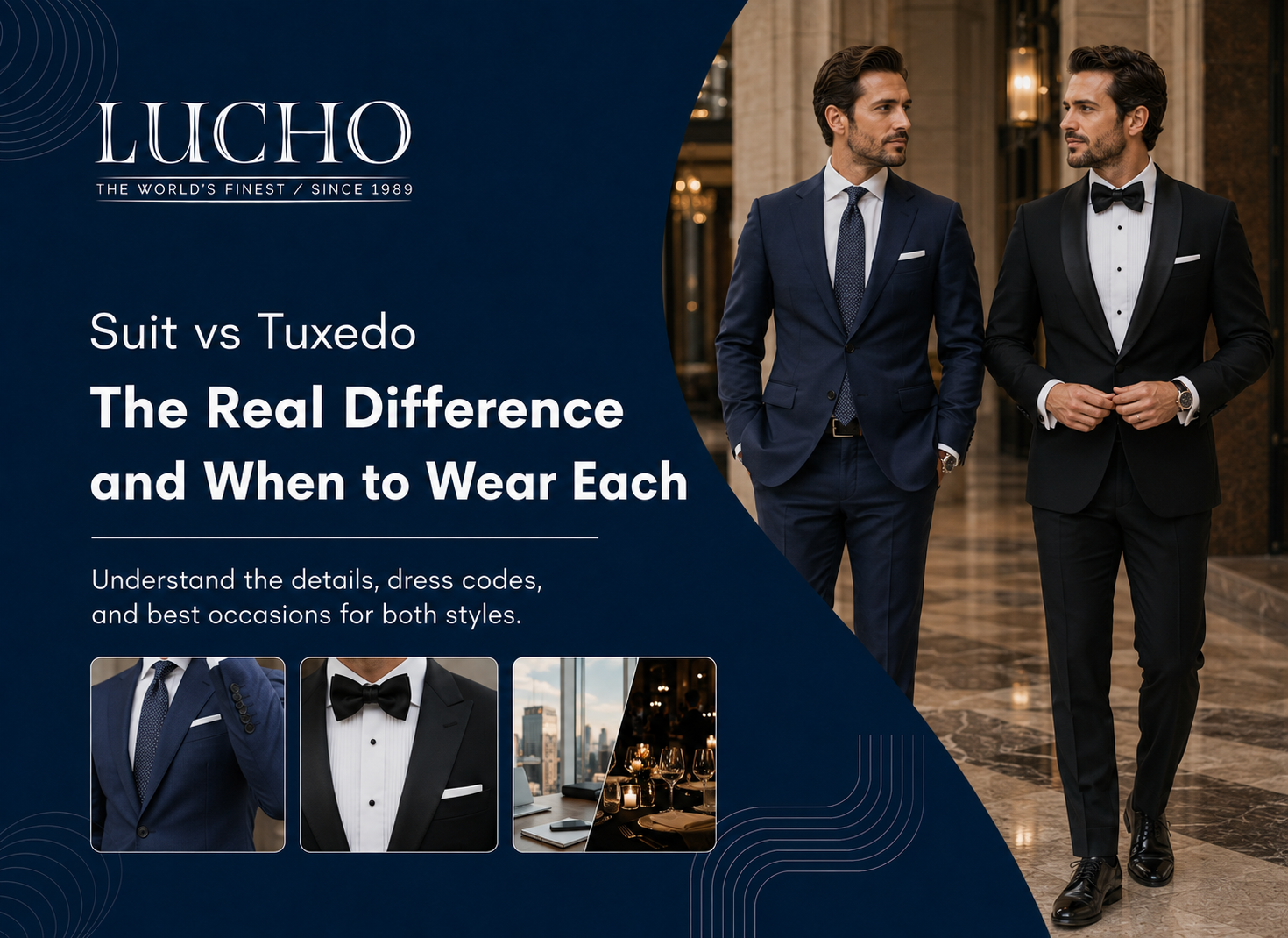
Suit vs Tuxedo: The Real Difference (and When to Wear Each)
A suit and a tuxedo are not the same thing, even though they can look alike from across a room. The easiest way to tell them apart is the shine. A tuxedo has satin on the lapels, the buttons, and often down the side of the pants. A suit does not. That one detail changes what each one is for, how formal it looks, and where you should wear it.
Table of Contents
ToggleIf you have an event coming up and you are not sure which one to pick, this guide will walk you through it in plain language. No confusing fashion terms. Just the facts you need to make the right call.
A lot of men use the words “suit” and “tuxedo” like they mean the same thing. That mix-up is easy to understand. Both outfits have a jacket. Both have matching pants. Both look sharp in photos. But a tuxedo and a suit are built for different jobs, and wearing the wrong one to the wrong event can make you feel out of place the moment you walk in the door. The good news is that once you learn the handful of details that separate them, you will be able to tell the two apart in seconds, whether you are shopping in a store or scrolling through pictures online.
What Is a Suit?
A suit is a matching jacket and pair of pants made from the same fabric. That is really it. Suits come in almost any color, from navy and gray to lighter shades like tan or light blue. They can be worn with a plain necktie or no tie at all, and they work for a huge range of events.
You can wear a suit to work, to a job interview, to church, to a daytime wedding, or even to a nice dinner. A good suit is the most useful thing in a man’s closet because it flexes to fit almost any setting. Change the shirt, tie, or shoes, and the same suit can look casual or sharp.
Suits also come apart in a way tuxedos do not. You can wear the jacket on its own over a plain shirt, or wear just the pants with a different jacket entirely. Store owners call this “separates,” and it is one more reason suits stretch further than tuxedos when it comes to getting your money’s worth. A single well-made navy suit can be worn to dozens of events across several years without anyone noticing it is the same suit twice, especially if you switch up the shirt and tie each time.
The fabric of a suit also does more of the talking than a tuxedo’s fabric does. Wool, wool blends, and lighter weaves for warm climates all show up in suits, which lets the wearer choose based on the season and the weather rather than a strict formal dress code. In a hot and humid city, this matters more than people realize, since a suit built for a cool climate can feel unbearable at an outdoor Houston event in July.
What Is a Tuxedo?
A tuxedo is built for one purpose: formal evening events. You can spot one by the satin fabric on the lapels, buttons, and pant stripe. That satin is the main thing that separates a tuxedo from a suit, and it is also what makes a tuxedo shine under evening lights at a wedding or a gala.
Tuxedos are almost always black or midnight blue. They are worn with a bow tie, not a long necktie, and often paired with a simple white dress shirt. Because a tuxedo has one clear job, it does not flex the way a suit does. You would not wear a tuxedo to the office or to a casual weekend event. It is meant for black tie occasions and nothing more casual than that.
The word “tuxedo” actually comes from Tuxedo Park, a small community in New York where the outfit first became popular in the late 1800s as a shorter, more relaxed alternative to the long tailcoats men wore before it. That history is part of why the tuxedo still carries a formal, old-fashioned feel today, even though the cut has gotten more modern over the years.
Beyond the satin, tuxedo jackets are also cut a bit differently than suit jackets. They tend to sit closer to the body and have a cleaner line through the chest and shoulders, since the whole point of a tuxedo is to look polished under bright evening lighting. Some tuxedo jackets also come with a shawl lapel, which is a single rounded piece of fabric that curves smoothly around the neck instead of forming a notch. You will almost never see a shawl lapel on an everyday suit.
What Is the Real Difference Between a Suit and a Tuxedo?
The two garments look similar at a glance, so it helps to see the differences side by side.
| Feature | Suit | Tuxedo |
|---|---|---|
| Lapel fabric | Same fabric as the jacket | Satin or grosgrain |
| Buttons | Plastic or matching fabric | Satin covered |
| Pant leg | No stripe | Satin stripe down the side |
| Tie | Necktie or bow tie | Bow tie only |
| Colors | Any color or pattern | Almost always black or midnight blue |
| Best for | Work, interviews, daytime events, casual weddings | Black tie weddings, galas, formal evening events |
| How often you can wear it | Often, in many settings | Rarely, only for formal events |
Once you know to look for the satin, you will never mix the two up again. Everything else, like the color choice or the type of tie, follows from that one detail.
When Should You Wear a Tuxedo Instead of a Suit?
Wear a tuxedo when the invitation clearly asks for one. Look for words like “black tie,” “black tie optional,” or “formal” on the invite. These are the events where a tuxedo makes sense:
- A wedding after 6 p.m. where the invitation says black tie
- A gala, awards dinner, or charity fundraiser
- Prom or a formal school dance
- Any event where the host specifically asks for formal evening wear
If none of those words appear on the invitation, you are almost always safe in a well-fitted suit instead.
Can You Wear a Suit to a Black Tie Event?
This is one of the most common questions people search for, and the short answer is: it depends on the exact wording.
If the invitation says “black tie,” that means tuxedo, full stop. Showing up in a suit will make you stand out for the wrong reason.
If it says “black tie optional,” a dark, well-tailored suit (navy or charcoal) paired with a neat tie is acceptable. Many guests still choose a tuxedo in this case, but a suit will not look out of place.
If it says “formal” without the words “black tie,” a dark suit is usually the safer and more common choice, especially for daytime events.
When in doubt, a simple rule works well: the later and more exclusive the event, the more likely a tuxedo is the right call.
What Accessories Go With Each One?
The accessories are just as different as the jackets, and getting them wrong is one of the easiest ways to look out of place.
A tuxedo is traditionally worn with:
- A black bow tie, not a long necktie
- A white tuxedo shirt, often with a pleated front
- Black patent leather or highly polished dress shoes
- A cummerbund or vest to cover the waistband, if the jacket is single-breasted
- Simple cufflinks and shirt studs instead of buttons
A suit gives you far more freedom:
- A long necktie in almost any color or pattern, or no tie at all for a more relaxed look
- Any dress shirt color, from crisp white to soft pastels or subtle patterns
- Brown or black leather dress shoes, depending on the suit color
- A belt, which should never be worn with a tuxedo
- Pocket squares, watches, and other personal touches that fit your style
If you remember one rule about accessories, remember this: a tuxedo dresses you the same way almost every time, while a suit lets you make it your own.
Suit or Tuxedo for a Houston Wedding?
Houston weddings bring their own twist to this decision because of the climate and the mix of indoor and outdoor venues around the city. A summer wedding at an outdoor venue almost always calls for a suit, since tuxedos trap more heat and satin does not breathe well in Houston humidity. An evening wedding inside a ballroom or a formal venue downtown is a much better fit for a tuxedo, especially if the invitation spells out a black tie dress code.
If the wedding falls somewhere in between, like an early evening ceremony with a formal reception afterward, check the invitation closely for wording like “black tie” or “cocktail attire.” When the dress code is not clear, it is always fine to reach out to the couple directly and ask. Most couples would rather answer a quick question than have a guest show up dressed the wrong way.
Suit vs Tuxedo: Which One Costs More?
A tuxedo usually costs more than a similar quality suit because of the satin trim and the extra construction work that goes into it. That is one reason many men rent a tuxedo instead of buying one, especially if they only need it once or twice a year.
A suit is a better long-term investment because you will actually wear it often. If you are building a wardrobe from scratch and can only afford one right now, a well-made suit will serve you far more often than a tuxedo will.
Even a small amount of satin on a jacket, like satin lapels alone, can shift how formal an outfit reads to guests. That is why tailors treat satin as the dividing line between the two garments rather than color or price.
How to Choose Between a Suit and a Tuxedo
Ask yourself these three questions before you decide:
- What does the invitation say? If it says black tie, that decision is already made for you.
- What time of day is the event? Formal evening events lean tuxedo. Daytime events lean suit.
- Will you wear it again? If yes, a suit gives you more use out of your money. If it is a one-time formal event, renting a tuxedo may make more sense.
If you are still unsure after answering these, a custom-fitted approach through made to measure and bespoke tailoring takes the guesswork out of fit and formality, since a tailor can tell you exactly what a specific event calls for.
Frequently Asked Questions
Is a tuxedo just a fancy suit?
No. A tuxedo is a separate category of formal wear built specifically for black tie events. The satin lapels, satin-covered buttons, and satin pant stripe are unique to tuxedos and are not found on suits.
Can a black suit replace a tuxedo?
Only if the invitation allows it. A black suit can work for “black tie optional” events, but it cannot replace a tuxedo when an invitation specifically says “black tie.”
Do you wear a bow tie with a suit or only with a tuxedo?
A bow tie is traditional with a tuxedo, but it can also be worn with a suit for a more modern or dressed-up look. A tuxedo should never be paired with a long necktie.
What is the biggest visual difference between a suit and a tuxedo?
The satin. Look at the lapels first. If they shine and feel smooth like satin, it is a tuxedo. If the lapel fabric matches the rest of the jacket exactly, it is a suit.
Is it ever okay to wear a suit to a wedding?
Yes, for most weddings. Suits are appropriate for the vast majority of weddings, especially daytime and casual to semi-formal evening weddings. Save the tuxedo for weddings that specifically request black tie.
Should I rent or buy a tuxedo?
Rent if you only need one for a single event and do not expect to attend many black tie occasions. Buy or have one custom made if you attend formal events often enough to get real use out of it, since owning one that actually fits well almost always looks better than a rental.
Can a tuxedo be any color other than black?
Yes, though black and midnight blue remain the most common and the safest choices. Some men choose a dark burgundy or deep green tuxedo jacket for a more personal look, but this only works when the dress code allows some flexibility, such as a “black tie creative” event.
The Bottom Line
A suit is your everyday, do-it-all garment. A tuxedo is reserved for formal evening events and stands out because of its satin details. Check your invitation, think about the time and formality of the event, and you will know exactly which one to reach for.
If you have a formal event on the calendar and want to get the fit and formality exactly right, Lucho’s custom tuxedo service in Houston can help you look sharp without the guesswork.
Contact Us
Recent Posts
- How a Dress Shirt Should Fit: 6 Easy Checks
- Your First Custom Suit Fitting: What Happens and How to Prepare
- What Is Cocktail Attire for Men? A Simple Guide
- Wool vs Linen vs Cotton: Best Suit Fabric for Houston Heat
- What to Wear to a Cigar Lounge: A Men’s Style Guide
- How to Measure Yourself for a Suit at Home (Easy Guide)
- Suit vs Tuxedo: The Real Difference (and When to Wear Each)
- The Return of the Double-Breasted Suit: How to Wear It in 2026
- Best Dress Pants for Men: The Ultimate 2026 Fit & Style Guide
- Black Suits Men: Style Guide & When to Wear Them