

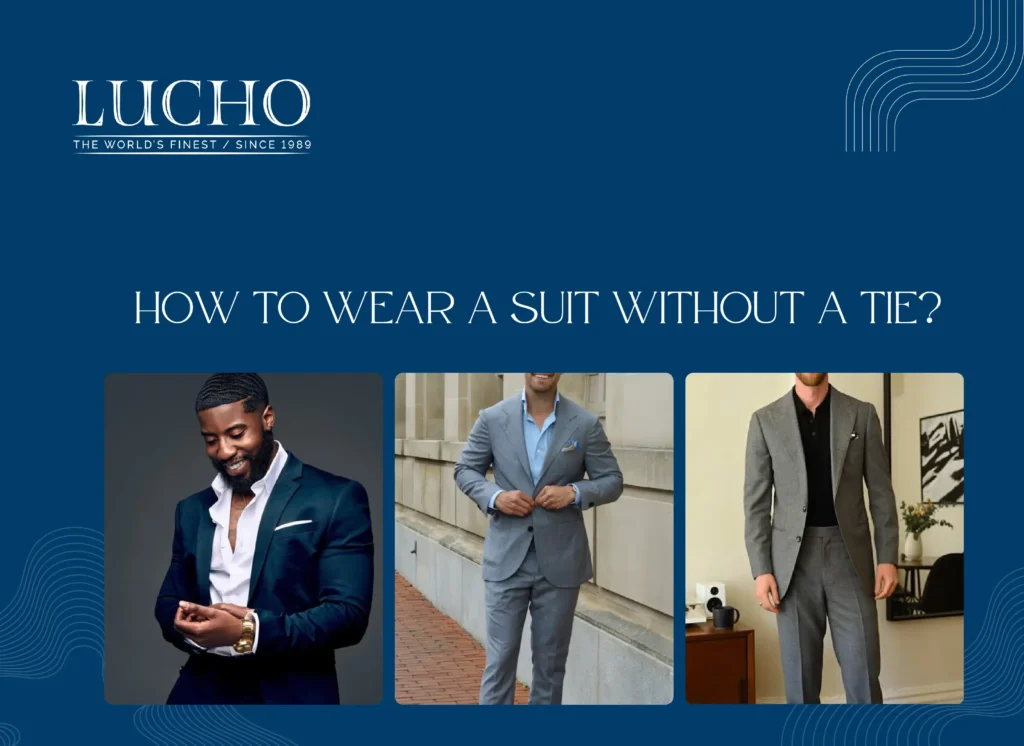
Wearing a Suit Without a Tie: Yes, It Works, and Here’s How to Do It Right
Yes, you can wear a suit without a tie. It works at business casual offices, dinners, cocktail events, and many weddings. It does not work at black-tie events or formal interviews. The gap between sharp and sloppy comes down to fit, the shirt collar, and a few small details.
Table of Contents
ToggleMenswear rules have loosened up a lot. More offices and events now welcome a polished suit with an open collar. But taking the tie off is not enough. Without it, people look at your collar, your jacket, and your shoes. This guide shows you when to skip the tie, what to wear in its place, and how to make the look seem planned, not forgotten.
You might wonder what this look is called. There is no official name. People say no-tie suit or open-collar suit. It is simply a regular suit worn a different way.
When Is It Okay to Wear a Suit Without a Tie?
Business Casual Workplaces
Many offices now treat the no-tie suit as normal. Creative agencies, tech companies, startups, and consulting firms often lean relaxed but polished. If your dress code says business casual, a well-fitted suit with an open collar is usually a safe choice. Not sure? Watch what the leaders at your company wear.
Social and Semi-Formal Events
A tie can feel like too much in plenty of settings outside the office:
- Dinner parties and cocktail events
- Weddings with a smart casual or cocktail attire dress code
- Networking events and professional meetups
- Celebrations and graduations
Houston’s culture is social and warm, so an open-collar suit fits right in. For weddings, check the invitation first. If the dress code is unclear, bring a tie and decide when you get there.
When You Should Not Skip the Tie
Keep the tie on for:
- Black-tie or other formal events
- Traditional or religious ceremonies
- Conservative offices where a suit and tie is expected
- Interviews in formal fields like law or finance
Read the room. When in doubt, wear the tie. You can always take it off later, but you can’t put it on if you left it at home.
Choosing the Right Suit for a No-Tie Look
Best Suit Colors
Some colors work better without a tie:
- Navy blue: Clean and versatile. Works almost anywhere.
- Charcoal grey: Sharp and professional without feeling stiff.
- Light grey: A good pick for daytime and social events.
- Earth tones (tan, camel, olive): More relaxed, great for casual occasions.
- Black: Best saved for evening events.
Bold pinstripes and loud patterns can feel too formal without a tie to anchor them. Stick with solids or soft textures like herringbone.
Suit Styles That Work Without a Tie
Two styles handle the missing tie especially well.
A double-breasted jacket already carries a lot of formality, so it can take an open collar without looking underdressed. Keep it buttoned.
A three-piece suit adds structure across your chest, which helps fill the space where a tie would sit. Keep the vest buttoned and the shirt crisp. In the middle of a Houston summer, you may want to skip the vest.
Fabric Matters
Fabric changes how relaxed or polished you look.
- Lightweight wool: The most flexible choice. Works all year.
- Linen: Great for Houston summers and looks casual on purpose.
- Cotton blends: Easy to wear and a good fit for smart casual settings.
At Lucho, we help Houston men pick fabrics that make sense for the weather and the event. A breathable wool or linen suit is not just a style choice here. It is a practical one.
Fit Is Everything
This one is not optional. A no-tie look lives or dies on fit. A trim, close-fitting suit gives your outfit shape even without a tie. A boxy or oversized suit with no tie looks unfinished.
Wondering which cut works best if you rarely wear ties? Look for a clean, slim silhouette with a lightly structured shoulder. The jacket should skim your body, the trousers should taper a little, and nothing should pull or bunch.
If your suit does not fit right, no amount of styling will save it. Not sure what to fix first? Our suit alteration guide covers the changes that matter most.
The Shirt Makes or Breaks the Look
Best Shirt Styles
With no tie covering the front, your shirt does more of the work.
- Crisp white dress shirt: Clean, classic, and good with any suit color.
- Light blue dress shirt: A bit softer, still polished.
- Oxford button-down: Casual but structured, great for smart casual settings.
Skip shirts that look wrinkled, loose, or too casual. A sloppy shirt without a tie looks underdressed, not relaxed.
How Should a Shirt Collar Sit Without a Tie?
A good collar stands up on its own. It sits flat against your jacket lapels, has a soft roll at the neck, and does not flop, curl, or sink under the jacket.
The collar is the most visible part of your shirt now, so the style matters:
- Spread collar: Opens the neckline cleanly and looks strong.
- Semi-spread collar: A little softer and still professional.
- Button-down collar: Naturally casual, and a good match for linen or cotton suits.
Very narrow point collars tend to look unfinished without a tie. If your collars tend to wilt, ask for collar stays or a firmer collar when you order shirts.
How to Keep It Sharp
- Iron or steam the shirt before you wear it.
- Make sure it fits through the chest and shoulders without pulling.
- The collar should lie flat and clean against the lapels.
How Many Buttons Should You Undo?
One open button at the collar is the standard. Two is fine for a more casual suit. Three or more starts to look undone. Some men go the other way and button the shirt all the way up with no tie. That works best with a slim fit, a crisp spread collar, and an evening setting.
Keep the Neckline Clean
Your neckline draws the eye now that the tie is gone.
- No undershirt should show at the collar.
- The collar should have a natural roll, not be forced flat or puffed out.
- Check for stains, pulls, or worn spots near the collar.
Jacket Fit and Structure
A structured shoulder lifts the whole look. When the jacket sits well, the outfit looks intentional. Sleeve length matters too. Aim for about a quarter to half an inch of shirt cuff showing past the jacket sleeve. It is a small detail that shows you take care.
Accessories Replacing the Tie
When the tie goes, your accessories carry more of the visual weight. For help matching colors and pieces across a full outfit, read our suit accessories styling guide.
Pocket Square Styling
A pocket square is the best single accessory for a no-tie suit. It adds color and polish without adding formality. A plain white square with a flat fold works almost anywhere. A patterned square in a matching color is great for social events.
Watches
A clean watch fills the space well. Good choices:
- Slim dress watches with a minimalist face
- Leather straps for a more polished feel
- Metal bracelets for a modern look
Skip big, sporty watches. They clash with the structure of the suit.
Lapel Pins and Subtle Details
One small lapel pin adds interest. A jacket covered in pins and chains looks busy. Keep it simple.
Shoes Completing the Look
Formal Options
For a more polished no-tie outfit, stick with leather:
- Oxford shoes: Clean and structured, perfect for business casual.
- Derby shoes: A little more relaxed than Oxfords, still sharp.
Smart Casual Options
For relaxed or social events, you have more room:
- Loafers: The go-to shoe for a no-tie suit. Comfortable, stylish, and easy.
- Clean white sneakers: They work with slim suits in a modern, casual setting.
Matching Shoes With Suit Style
A formal suit without a tie needs leather shoes to stay balanced. A casual linen or cotton suit pairs well with loafers or clean sneakers. Brown and tan shoes look great with navy and grey. Black shoes look cleaner with charcoal and darker suits.
Common Mistakes to Avoid
- A poor fit: Bad fit ruins the whole look. Fix this first.
- A t-shirt under the jacket: That is not a no-tie suit. It is a jacket over a t-shirt.
- Too many open buttons: Two at most. After that, it looks accidental.
- Skipping grooming: Hair, beard, and shoes matter more in a relaxed look. There is less formality to hide behind.
- Too many accessories: Pick one or two. Do not stack rings, pins, bracelets, and a big watch all at once.
Outfit Ideas You Can Copy
Classic business casual: Navy suit, white dress shirt, brown Oxford shoes, white pocket square. Clean and professional, and right for almost any business or semi-formal setting.
Modern smart casual: Grey suit, light blue Oxford shirt, tan loafers, simple leather watch. A go-to for Houston professionals who want to look put together without looking stiff.
Relaxed summer: Linen suit in tan or light grey, open-collar white shirt, brown loafers. Built for Houston heat. Light, breathable, and still polished.
Evening event: Black or dark navy suit, black dress shirt, black Oxford shoes. Let the one-color palette do the work and keep accessories minimal.
How to Make a No-Tie Suit Look Intentional
Three things separate a sharp no-tie suit from a sloppy one.
Confidence and posture. How you carry the suit matters as much as the suit. Stand tall, move with purpose, and wear it like you chose it, because you did.
Clean grooming. A fresh haircut, a neat beard, and polished shoes tell people you notice details. These matter even more in a casual look.
Good suit care. A wrinkled, stretched, or loose suit never looks sharp, no matter how you style it. Steam it before you wear it, store it on a proper hanger, and bring it in for alterations when it needs them. At Lucho, we offer alterations and couture care so your suit keeps fitting the way it should, with a tie or without one.
Conclusion
Learning to wear a suit without a tie gives you real freedom in how you dress for work, events, and everything between. It works when the fit is right, the shirt is crisp, and the small details are handled. The tie was never what made a suit look good. It was always the fit, the fabric, and the man wearing it.
Want a suit built for the way you dress in Houston? Visit Lucho at 3637 W. Alabama, Suite 100. We have been fitting Houston men since 1989, and we know how to build a suit that works with a tie or without one. Call us at (832) 495-8558 or book a fitting online.
Frequently Asked Questions
Can you wear a suit without a tie?
Yes. A suit without a tie is fine at most business casual workplaces, dinners, cocktail events, and smart casual weddings. Skip the look at black-tie events, formal interviews, and traditional ceremonies.
Is a suit without a tie business casual?
Yes. A well-fitted suit with a crisp shirt and an open collar fits most business casual dress codes. Stick to navy, charcoal, or grey, and add leather shoes or loafers to keep it polished.
What is a suit without a tie called?
There is no official name. People call it a no-tie suit or an open-collar suit. It is a regular suit worn with an unbuttoned collar instead of a tie.
Do you need a tie with a suit?
Not always. You need one for black-tie events, formal interviews, and conservative offices. For most other settings, it is your choice.
Do you wear a suit without a tie at a wedding?
It depends on the dress code. Smart casual and cocktail attire welcome an open collar. Black-tie and traditional ceremonies still call for a tie. When the invitation is unclear, wear one.
What shirt looks best without a tie?
A crisp white or light blue dress shirt with a spread or semi-spread collar is the safest pick. An Oxford button-down works well for smart casual events and pairs nicely with linen or cotton suits.
How should a shirt collar sit without a tie?
It should stand on its own, lie flat against the lapels, and show a soft roll at the neck. If it flops or curls, try collar stays or a firmer collar.
Should I unbutton my shirt collar fully?
No. One open button is standard, and two works for casual suits. Three or more looks undone.
Do loafers go with suits?
Yes. Loafers are one of the best shoes for a no-tie suit, especially in smart casual and social settings. Pair them with a lighter linen or cotton suit.
Can you wear a double-breasted or three-piece suit without a tie?
Yes. A double-breasted jacket is formal enough to handle an open collar, and a vest in a three-piece suit adds structure where a tie would be. Keep both buttoned and the shirt crisp.
Is it better to wear a tie or no tie?
It depends on the setting. For formal events, conservative offices, and traditional interviews, wear the tie. For business casual workplaces and social events, going without one is fine and often the more modern choice.
Contact Us
Recent Posts
- Your First Custom Suit Fitting: What Happens and How to Prepare
- What Is Cocktail Attire for Men? A Simple Guide
- Wool vs Linen vs Cotton: Best Suit Fabric for Houston Heat
- What to Wear to a Cigar Lounge: A Men’s Style Guide
- How to Measure Yourself for a Suit at Home (Easy Guide)
- Suit vs Tuxedo: The Real Difference (and When to Wear Each)
- The Return of the Double-Breasted Suit: How to Wear It in 2026
- Best Dress Pants for Men: The Ultimate 2026 Fit & Style Guide
- Black Suits Men: Style Guide & When to Wear Them
- Business Casual for Men: Modern Rules and Ideas for 2026