

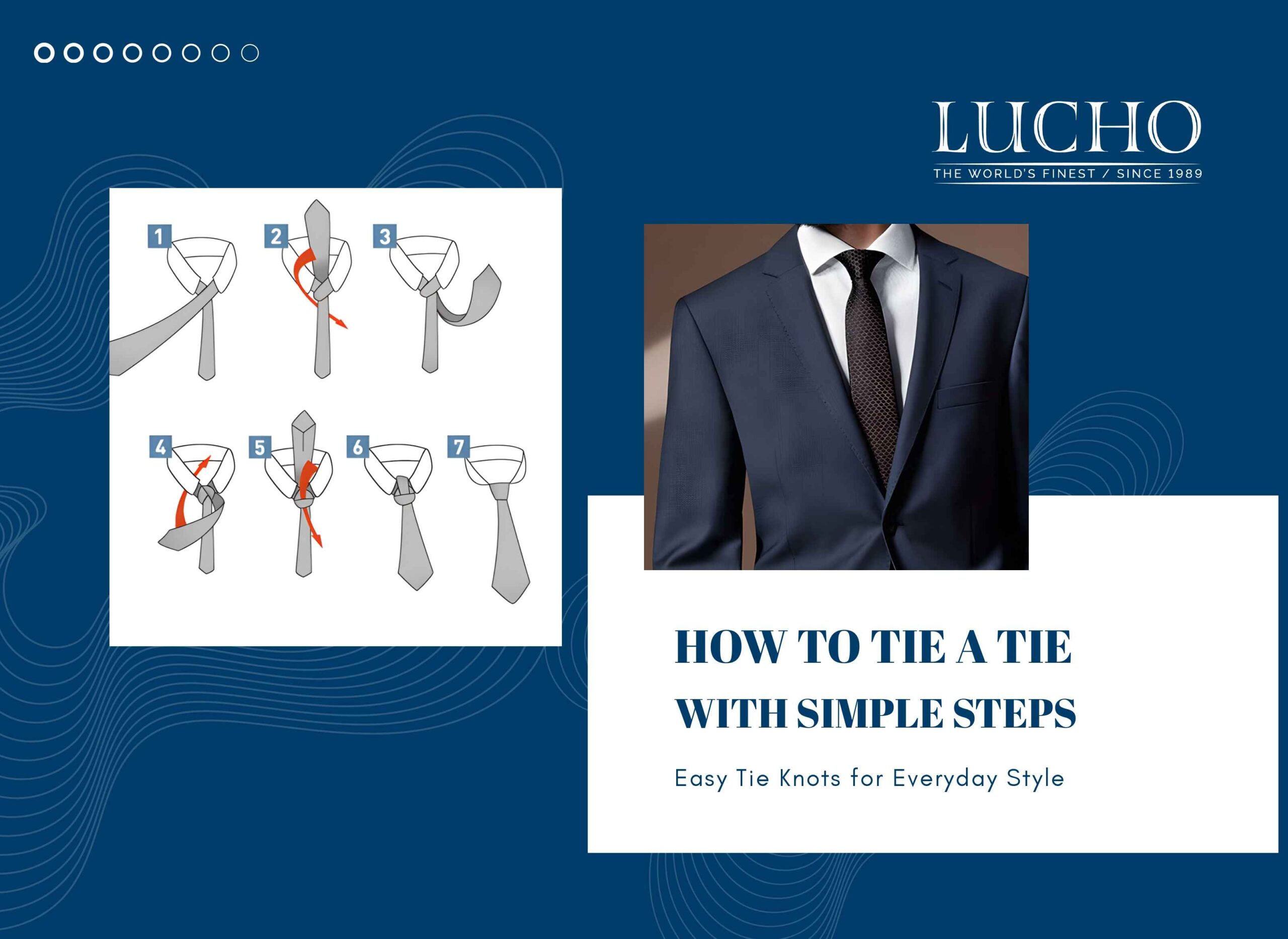
How To Tie A Tie: 4 Easy Knots Anyone Can Learn
You are standing in front of the mirror. A big event in an hour. The tie is around your neck, and your brain has gone completely blank. It happens to almost everyone because most guys only wear a tie a handful of times a year. The steps fade fast when you do not use them regularly. The good news is that tying a tie is one of those things that clicks quickly once you see it laid out clearly. This guide walks you through four knots: the Windsor, the Half Windsor, the Four-in-Hand, and the bow tie. Each one is covered from start to finish, so you can pick the right method for the occasion and get out the door looking sharp.
Table of Contents
ToggleBefore You Start: Two Things That Matter
Two details trip up most beginners before they even get to the first step.
The wide end does all the work. It wraps, crosses, and pulls through. The narrow end basically stays in place the whole time. Keep that in mind, and the steps make a lot more sense.
Start with the wide end hanging about 12 inches lower than the narrow end on your right side. This gives you enough fabric to complete the knot. If you are on the taller side or your tie runs short, add an extra inch or two before you begin.
One more thing: keep everything loose until the very end. Do not pull anything tight mid-knot. A knot built on tight fabric comes out lumpy and crooked. Build it loose, then slide it up and snug it into place at the collar.
The Windsor Knot
The Windsor is the most formal of the four. It creates a wide, symmetrical triangle that sits confidently under the collar and photographs well. If you are heading to a job interview, a wedding, or a formal dinner, this is the knot people expect to see. It works especially well with spread-collar shirts.
Step 1. Flip up your collar and drape the tie around your neck. Wide end on the right, narrow end on the left. Let the wide end hang about 12 inches lower.
Step 2. Bring the wide end across the narrow end so they form an X just below your chin.
Step 3. Tuck the wide end up through the neck loop from underneath, then bring it back down in front.
Step 4. Slide the wide end underneath toward your right side. The back of the fabric will face outward here.
Step 5. Bring the wide end across to the left. The front of the fabric should now face you.
Step 6. Pull the wide end up through the neck loop again. You will see the knot starting to take shape.
Step 7. Bring the wide end down and push it through the horizontal loop sitting across the front of the knot. Keep that loop loose with one finger so the fabric slides through cleanly.
Step 8. Hold the narrow end still and slide the knot upward toward your collar. Adjust until it sits snug but not tight at the base of your collar. Fold the collar down.
One finishing touch worth doing: pinch the fabric just below the knot right before you tighten all the way. That small crease is called the dimple. It takes two seconds and makes a noticeable difference in how polished the knot looks.
The Four-in-Hand Knot
If the Windsor sounds like too many steps on a weekday morning, the Four-in-Hand is what you want. It is the fastest knot to tie, works with virtually every tie you own, and still looks clean and intentional. The shape is slightly narrower and a little asymmetrical, which pairs well with button-down collar shirts and casual occasions.
Step 1. Collar up, tie around your neck. Wide end on the right, hanging about 12 inches below the narrow end.
Step 2. Cross the wide end over the narrow end from right to left.
Step 3. Wrap the wide end underneath the narrow end and back toward the right.
Step 4. Bring the wide end across the front toward the left again.
Step 5. Pull the wide end up through the neck loop from below.
Step 6. Slide the wide end down through the front loop you just formed. Keep it a little loose.
Step 7. Hold the narrow end and slide the knot upward with the other hand. Adjust the length so the tip lands at your belt buckle. Fold the collar down.
Most guys learn this one first. Once you have done it two or three times, it takes under 90 seconds. It is also a forgiving knot for thick or textured fabrics and is a great starting point if you are exploring different tie styles.
The Half Windsor Knot
The Half Windsor sits right between the Four-in-Hand and the full Windsor in terms of size and effort. It produces a medium triangle that looks symmetrical and clean without being as wide as the full Windsor. If you wear a tie at work a few days a week, this is the everyday knot worth mastering.
Step 1. Collar up, wide end on the right, hanging about 12 inches below the narrow end.
Step 2. Cross the wide end over the narrow end.
Step 3. Bring the wide end underneath the narrow end with the back of the fabric facing outward. This forms the base of the knot.
Step 4. Pull the wide end up and over toward your left side, then through the neck loop from below.
Step 5. Bring it down so the back of the fabric faces right and lies flat.
Step 6. Cross the wide end over the narrow end from right to left, front of the fabric facing outward.
Step 7. Pull the wide end up through the neck loop again.
Step 8. Slide it down through the front horizontal loop. Keep things even as you do this.
Step 9. Hold the narrow end and slide the knot up with the other hand. Adjust for symmetry and lower the collar.
Look in the mirror. The Half Windsor has a clean, triangular shape that reads as polished and professional. Most people across the room will not be able to tell it apart from a full Windsor, but it takes considerably less fabric and fewer wraps to get there.
Four-in-Hand vs Half Windsor: Which Is Easier?
The Four-in-Hand is technically easier to learn because it takes fewer steps and less fabric manipulation. Most men can tie it in under 90 seconds after a few practice runs. The Half Windsor takes a bit longer but creates a more symmetrical, formal look. If you are preparing for a job interview or business presentation, the Half Windsor is worth the extra minute. If you are getting dressed on a weekday morning, the Four-in-Hand is your friend. The real answer depends on what your collar demands: wide spread collars look better with a fuller knot like the Half Windsor, while button-down collars suit the slimmer Four-in-Hand.
How to Tie a Bow Tie
A real, hand-tied bow tie looks noticeably better than a pre-tied clip-on. It has a natural, slightly uneven quality that reads as intentional rather than perfect, and that is actually part of the appeal. Bow ties work for black-tie events, themed weddings, proms, and any occasion where you want to wear something distinctive.
Step 1. Drape the bow tie around your neck with the collar raised. Let one end hang about two inches lower than the other.
Step 2. Cross the longer end over the shorter end to form the base of the knot.
Step 3. Pull the longer end up through the neck loop from underneath. Pull it snug but not fully tight.
Step 4. Fold the shorter end horizontally to create the bow shape. This becomes the front of your finished bow.
Step 5. Drop the longer end straight down over the center of that folded bow. Hold the bow with your other hand so it does not move.
Step 6. Fold the hanging end back on itself and push it through the loop sitting behind the bow.
Step 7. Pull both folded ends away from each other to tighten. Adjust until both sides look roughly balanced.
It does not need to be perfectly even. A slightly asymmetrical bow tie looks more natural and more confident than one that is mirror-perfect. Give it a few practice runs before the event. Once it clicks, it is genuinely fun to tie.
Common Mistakes That Make Knots Look Off
A lot of guys end up with a knot that looks wrong and cannot figure out why. These are the most common problems.
Starting with the wrong length. If you do not let the wide end hang low enough at the start, you will run short of fabric before the knot is finished. Always begin with the wide end about 12 inches below the narrow end.
Pulling tight too early. Tightening the mid-knot makes the fabric stiff and uncooperative. Build the entire knot loosely, then slide it up and snug it into place at the very end.
Skipping the dimple. That small indent just below the knot only takes two seconds to create. Pinch the fabric lightly just before you tighten for the last time. It makes any knot look more finished.
Mismatching the knot to the fabric. Thick knit ties and heavier fabrics need a simple knot like the Four-in-Hand. Thin silk ties can hold a fuller Windsor or Half Windsor. Using a bulky knot with a heavy fabric creates a messy, oversized result.
Skipping practice before the event. Trying a new knot for the first time while getting dressed for a wedding is a bad idea. Run through it three or four times on a day when nothing is on the line.
Choosing the Right Tie for the Occasion
The knot is only part of the picture. Picking the right tie for the setting matters just as much.
For job interviews and professional environments, stick with navy, burgundy, or dark grey. These colors read as trustworthy and composed without being dull. Skip anything overly bright or with a large, busy pattern.
For weddings, coordinate with the event’s color palette if you know it. Silk holds up well in formal settings and photographs beautifully. A subtle stripe or a solid color both work. The Windsor knot is the traditional wedding choice for good reason.
For casual or creative settings, this is where you have more room to play. Knit ties, bold colors, and interesting patterns are all fair game. The Four-in-Hand tends to look more relaxed, which suits casual occasions well.
One detail worth remembering: tie width should roughly match your jacket lapel width. A wide lapel with a skinny tie looks off balance. So does a narrow lapel with an oversized knot. When you are unsure, medium width covers most situations without looking out of place.
How Long Should a Tie Hang?
The tip of your tie should land right at the center of your belt buckle. This is the most proportional length for any body type. If the tip ends up too high or too low, untie it and adjust how far the wide end hangs before you start. Taller men should start with the wide end hanging a bit lower than the standard 12 inches to compensate.
Finding the Right Tie in Houston
Once you have mastered the knots, the next step is finding a tie that works for your build, skin tone, and the occasion. If you are shopping in Houston, Lucho carries a curated selection of quality ties in classic colors and modern styles. Whether you need a navy silk tie for a job interview, a burgundy knit for business casual, or something with a pattern for a special event, having ties that actually fit your frame makes a real difference. Stop by our showroom at 3637 W. Alabama, Suite 100, or browse our tie collection online.
FAQs: How to Tie a Tie
What is the simplest way to tie a tie?
The Four-in-Hand is the simplest. It takes fewer steps than any other knot and works with virtually every tie you own. Once you have done it two or three times, it becomes second nature and takes less than 90 seconds.
Can you tie a tie without a mirror?
Yes, once the steps are familiar. A mirror makes learning significantly faster in the beginning, but after about ten practice runs, most men can manage without one. Until then, keep a mirror nearby. Some guys even practice in the car on the way to an event.
Do different shirts need different tie knots?
Yes, because your collar width decides which knot looks balanced. Wide spread collars suit a bigger knot like the Windsor, while narrow or button-down collars look best with a smaller Four-in-Hand. Matching the knot to the collar keeps the whole look in proportion.
How do I make my tie knot look fuller?
Pinch the fabric just below the knot as you tighten to create a dimple. That single crease adds depth and makes any knot look fuller and more finished. A well-made silk tie holds this dimple far better than a stiff or cheap one.
What is the best tie knot for a wedding?
The Full Windsor is the classic wedding knot. Its wide, symmetrical triangle reads as formal and intentional, which is exactly what you want for the ceremony and photos. If you prefer something a little less bulky, the Half Windsor gives a similar polished look with less fabric.
What is the best tie knot for a job interview?
A Half Windsor or a Four-in-Hand is the safest choice for an interview. Both look sharp without drawing too much attention, and they pair well with the standard collars on most dress shirts. Stick to navy, burgundy, or dark grey for the color. If you want to stand out with personality, choose a subtle pattern over solid color, but keep the knot itself classic and tight.
How do you tie a silk tie without slipping?
Silk is slick, so keep the knot a touch tighter and work slowly through each step. Because silk is thin, it suits a fuller knot like the Windsor or Half Windsor, which gives the fabric something to grip against. Snug the knot up to the collar at the very end so it holds its shape through the day. After you tie it, you can tighten it slightly if you feel any slipping.
What do I do if my tie is too long or too short?
If your tie ends up too long, restart with less of the wide end hanging down before you begin. If it is too short, start with the wide end hanging lower so you have more fabric to work with. Taller men usually need to start with a few extra inches on the wide end. You can always practice on your hand first if you are unsure about the starting position.