

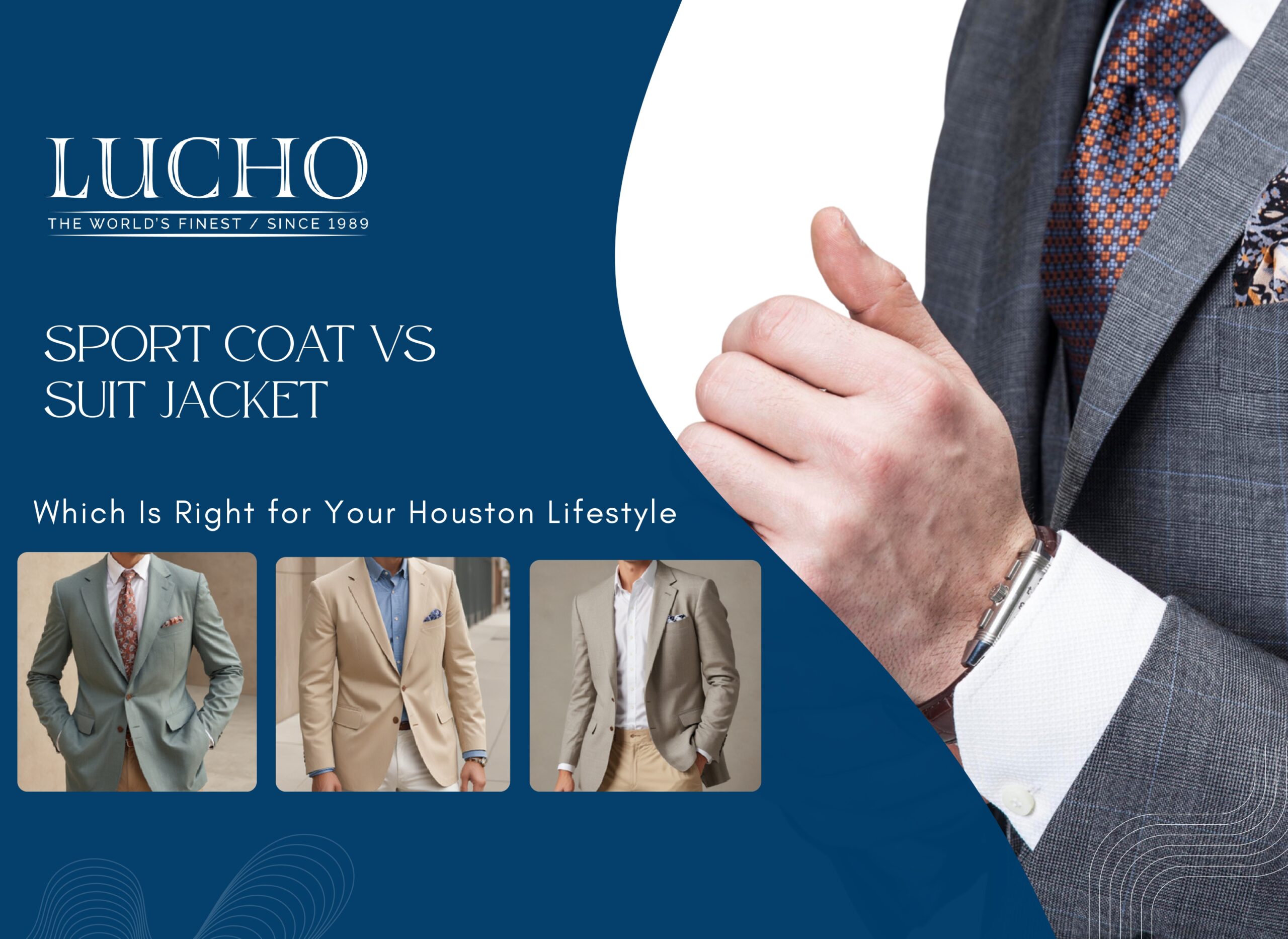
Sport Coat vs Suit Jacket: Which One Fits Your Houston Lifestyle?
A sport coat and a suit jacket look similar from across the room, but they’re built for different jobs. A sport coat is cut from heavier or textured cloth and works as a standalone piece over a shirt or jeans. A suit jacket is cut from smooth, matching fabric and is designed to pair with trousers cut from the same bolt of cloth, giving you one unified look for work or formal events.
Table of Contents
ToggleThat one distinction shapes almost everything else: how the jacket fits, when you’d wear it, and how it holds up in Houston’s heat. Here’s how to tell them apart and pick the right one for whatever is on your calendar this week.
What Is a Sport Coat?
If you’re looking for a simple sport coat definition, here it is: a sport coat is a single, unmatched jacket meant to be worn on its own, without trousers cut from the same fabric. That’s the core of the sport coat’s meaning: versatility. It’s built to mix and match rather than lock into one formal outfit.
Sport coats typically use:
- Heavier or textured wool, tweed, or cotton blends
- Patches, elbow details, or visible texture like herringbone
- Lighter internal structure, so they move and breathe more easily
That looser construction is exactly why a sport coat pairs so well with jeans, chinos, or a casual button-down. It’s built for flexibility, not for matching a specific pair of trousers.
What Is a Suit Jacket?
A suit jacket is one half of a matched set. It’s cut from the same fabric as its trousers, usually a smoother worsted wool, and built with a cleaner, more structured silhouette. Where a sport coat is meant to stand alone, a suit jacket is meant to complete a single, cohesive outfit.
Suit jackets typically use:
- Smooth, finer wool or wool-blend fabric
- A closer, more tailored chest and shoulder
- Simpler detailing, since the fabric itself carries the formality
That structure is what gives a suit its sharp, uniform line across a boardroom or a formal event.
Sport Coat vs Suit Jacket: Key Differences at a Glance
Feature | Sport Coat | Suit Jacket |
Fabric | Heavier, textured | Smooth, matched to trousers |
Worn with | Jeans, chinos, odd trousers | Matching suit trousers only |
Structure | Softer, more relaxed | Closer fit, more structured |
Best setting | Casual to smart-casual | Business, formal, evening events |
Houston fit | Great for daytime heat | Best for air-conditioned settings |
When to Wear a Sport Coat vs a Suit Jacket
Men’s Suit vs Sport Coat for a Semi-Formal Event
This is the trickiest call, and it’s where most men get stuck. For a semi-formal event, a well-cut sport coat in a darker fabric, paired with dress trousers, a button-down, and a tie, reads as polished without tipping into full formal wear. A suit is the safer choice if the invitation mentions “formal” or “black tie optional,” or if the event is indoors at night, weddings, galas, or formal dinners. If the event is outdoors, in the afternoon, or described as “semi-formal” or “cocktail attire,” a sport coat usually fits the room better and keeps you cooler.
Suit or Sport Coat for a Wedding?
Check the dress code first. Daytime or garden weddings lean toward a sport coat in a lighter fabric and color. Evening or black-tie weddings call for a suit, ideally in navy or charcoal. When in doubt, a suit is the more forgiving choice for a wedding, since it reads as intentional rather than casual.
When Should I Wear a Suit Coat?
Reach for a suit jacket any time the occasion calls for a matched, formal look, client meetings, interviews, courtrooms, and evening events. If the setting is business-formal or the dress code says “suit and tie,” this is your answer.
Everyday and Casual Wear
For lunch meetings, casual Fridays, or weekend plans, a sport coat does more work with less effort. It layers over a simple shirt and jeans without looking like you’re trying too hard, and it holds up better across a range of temperatures.
Sport Coat vs Suit Jacket for Houston’s Heat
Houston’s climate changes the calculation. Heavier suit fabric can feel stifling outdoors for most of the year, which is exactly why a sport coat in a lighter weight, an open weave cotton or linen blend, is often the more comfortable option for daytime events. Lighter colors also help reflect heat and look more at home outdoors. Save your suit jacket for spaces where the air conditioning is doing the heavy lifting, such as offices, evening venues, and indoor formal events.
How to Choose the Right Sport Coat for Daily Use
A few practical checks before you buy:
- Fabric weight: Pick something in the 8 to 10 oz range for year-round Houston wear.
- Fit through the shoulder: This is the one area a tailor can’t easily fix, so get it right at purchase.
- Color and pattern: Neutral solids or subtle textures pair with the widest range of shirts and trousers.
- Breathability: Look for natural fibers or blends with some stretch, especially if you’re wearing it most of the week.
If you’re building out a wardrobe from scratch, our team at Lucho can walk you through fit and fabric in person.
Can You Wear a Suit Jacket as a Sport Coat?
Technically, yes, but it rarely looks right. Suit jacket fabric is usually too smooth and formal to pair naturally with jeans or casual trousers, and the fit is cut specifically to match its trousers, so it can look slightly off when worn alone. If you want a jacket that works both ways, a sports coat is the better long-term investment.
Final Thoughts
The short version: a sport coat is built for flexibility and daytime comfort, a suit jacket is built for matched, formal precision. Once you know which job you need done, the choice gets a lot easier.
Not sure which one fits your closet right now? Browse our dress shirts to build the layer underneath, or explore our made-to-measure suits if your next event calls for the full matched look.
FAQs
How does a sports coat differ from a suit jacket?
A sport coat is a standalone jacket in heavier or textured fabric, meant to mix with different trousers. A suit jacket is matched to its own trousers in smooth fabric and built for a single formal look.
Which jacket is better for Houston weather?
A sport coat, especially in a lighter-weight fabric, handles heat and daytime events more comfortably than a structured suit jacket.
Can I wear a sports coat to business events?
It depends on the dress code. Business casual settings usually welcome a sport coat, but traditional business-formal meetings still call for a full suit.
What colors work for Houston weddings?
Lighter neutrals, tan, light grey, soft blue, work well for daytime or outdoor weddings. Navy or charcoal suits are the standard for evening or formal weddings.
How do I choose the right fit?
Focus on the shoulder seam first, since that’s the hardest part for a tailor to adjust later. The jacket should sit close without pulling across the back or chest.
FAQs
A sports coat is made from a thicker cloth and is suitable for casual occasions. A suit jacket is made of smooth fabric and pairs well with formal outfits.
A sports coat often feels cooler in our warm months. A suit jacket works best in cool rooms and formal events.
Yes, a sports coat works for simple business days here. Choose clean colours for a neat and calm office look.
Blue and grey suits are safe for most wedding plans. Light tones work well for outdoor summer events.
Choose a fit that lets your arms move with ease. Pick a jacket that shapes your chest without tight spots.